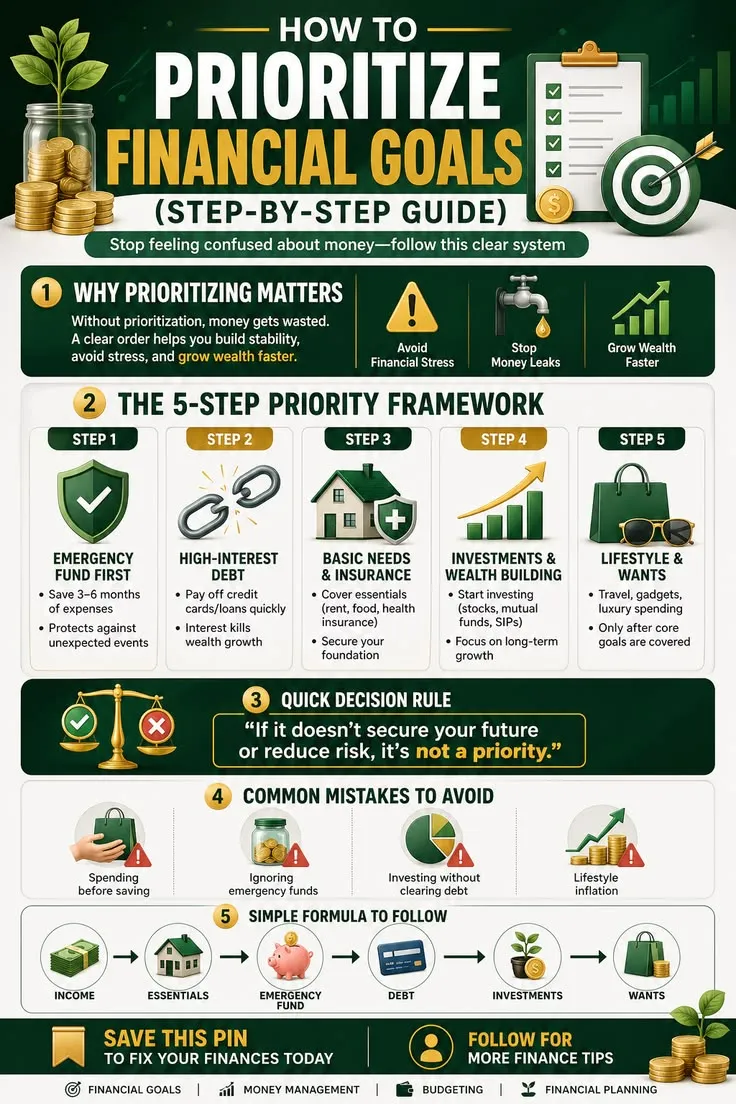
Choosing the right financial products is an important step toward achieving personal financial goals. Every individual has different financial needs, whether it is building savings, planning retirement, purchasing a home, protecting family members, or creating long-term wealth. Selecting financial products without understanding personal goals can lead to poor decisions and missed opportunities.
Financial products such as savings accounts, insurance plans, investment options, and retirement schemes are designed to meet different objectives. The right choice depends on factors like financial goals, income, risk tolerance, investment duration, and future requirements.
A goal-based approach helps individuals select financial products that match their specific needs instead of choosing options based only on popularity or short-term returns. Understanding how different financial products work allows people to create a balanced and effective financial plan.
Understanding Your Financial Goals First
Before choosing any financial product, it is important to clearly identify financial goals. A financial goal represents a specific objective that requires money within a certain period.
Financial goals can be divided into three main categories: short-term, medium-term, and long-term goals.
Short-term goals usually involve expenses that may occur within a few months or years, such as creating an emergency fund, buying electronic items, or planning a vacation.
Medium-term goals may include saving for education, purchasing a vehicle, or preparing for a major financial commitment.
Long-term goals generally include retirement planning, wealth creation, and securing future financial independence.
Understanding the purpose and timeline of each goal helps determine which financial product may be suitable.
Evaluating Your Current Financial Situation
Before investing or purchasing financial products, individuals should evaluate their current financial position.
Important factors include monthly income, regular expenses, existing savings, debts, and financial responsibilities.
A person with stable income and fewer financial obligations may have different options compared to someone managing loans or family responsibilities.
Understanding your financial situation helps avoid choosing products that create unnecessary financial pressure.
A proper evaluation also helps determine how much money can be allocated toward savings, investments, and protection plans.
Choosing Financial Products for Saving Goals
Savings products are generally suitable for people who want to keep money safe while maintaining easy access.
Savings accounts, fixed deposits, and similar options can help individuals manage short-term financial needs and maintain financial security.
These products usually focus on safety and stability rather than high returns.
People saving for emergency funds or short-term requirements often prefer products that provide liquidity and lower risk.
However, it is important to compare factors such as interest rates, withdrawal flexibility, and financial institution reliability before choosing savings options.
Selecting Investment Products for Wealth Creation
Investment products are designed to help money grow over time.
Individuals with long-term financial goals may consider investment options that have the potential to generate higher returns compared to traditional savings products.
Different investment products carry different levels of risk. Some options may provide stable returns, while others may experience market fluctuations.
The right investment choice depends on factors such as investment duration, financial goals, and personal comfort with risk.
Long-term investors often focus on building diversified portfolios rather than depending on a single investment option.
Understanding Risk Before Choosing Financial Products
Risk assessment is one of the most important parts of selecting financial products.
Every financial product carries some level of risk, whether related to market changes, inflation, interest rates, or financial conditions.
A person’s risk tolerance depends on factors such as age, income stability, financial goals, and personal preferences.
Someone with a longer investment timeline may be able to handle more market fluctuations, while someone saving for an immediate goal may prefer safer options.
Understanding risk helps individuals choose products that match their financial comfort level.
Choosing Insurance Products for Financial Protection
Insurance products serve a different purpose compared to savings and investments. Their main objective is financial protection against unexpected events.
Health insurance, life insurance, and other protection plans help reduce financial stress during emergencies.
Choosing insurance should depend on personal responsibilities, family needs, income level, and potential risks.
The right insurance coverage provides financial support when unexpected situations affect income or expenses.
Insurance should be viewed as a protection tool rather than only an investment option.
Selecting Retirement Planning Products
Retirement planning requires long-term financial preparation.
Retirement-focused financial products help individuals create income sources for their future years when regular employment income may reduce.
Choosing retirement products depends on factors such as current age, retirement goals, expected lifestyle, and investment duration.
Starting retirement planning early allows individuals more time to build financial security.
A proper retirement strategy often includes a combination of savings, investments, and protection planning.
Matching Financial Products With Time Duration
The time required to achieve a financial goal plays a major role in product selection.
Short-term goals usually require products that provide safety and accessibility.
Long-term goals may allow individuals to consider products focused on growth and wealth creation.
Choosing a product without considering the time period can create problems. For example, using high-risk options for short-term needs may create uncertainty, while using only low-growth products for long-term goals may limit wealth creation.
Matching products with timelines creates better financial planning.
Considering Liquidity Requirements
Liquidity refers to how easily money can be accessed when needed.
Some financial products allow quick access to funds, while others may have restrictions or longer investment periods.
Individuals should consider whether they may need access to their money before selecting a product.
Emergency savings generally require high liquidity, while long-term investments may allow money to remain invested for extended periods.
Understanding liquidity helps maintain financial flexibility.
The Importance of Diversification
Diversification means spreading money across different financial products instead of depending on one option.
A diversified approach can help balance risk and improve financial stability.
For example, individuals may combine savings products, investments, and insurance based on their financial goals.
Diversification reduces dependence on a single financial source and helps create a more balanced financial plan.
However, diversification should be based on personal goals rather than simply choosing many products without purpose.
Avoiding Common Mistakes While Choosing Financial Products
Many people make financial decisions without proper research.
One common mistake is selecting products only because others are using them. Financial decisions should always be based on individual goals and circumstances.
Another mistake is focusing only on returns while ignoring risks, charges, and suitability.
People should also avoid investing without understanding how a product works.
Taking time to research, compare options, and understand terms can prevent financial mistakes.
Reviewing Financial Products Regularly
Financial goals and personal situations change over time.
Changes in income, family responsibilities, market conditions, and future plans may require adjustments in financial strategies.
Regularly reviewing financial products ensures they continue to match current goals.
A product that was suitable several years ago may not always remain the best choice in changing circumstances.
Regular reviews help maintain an effective financial plan.
The Role of Financial Knowledge
Financial knowledge plays an important role in making better decisions.
Understanding basic concepts such as risk, returns, inflation, savings, and investments helps individuals choose products more confidently.
Continuous learning allows people to evaluate financial options and avoid unsuitable decisions.
Financial awareness is a valuable skill that improves money management throughout life.
Frequently Asked Questions (FAQs)
How do I choose the right financial product?
Choose financial products based on your goals, investment duration, risk tolerance, income, and financial responsibilities.
Should I focus on returns when selecting financial products?
Returns are important, but they should be considered along with risk, safety, liquidity, and suitability for your goals.
Can one financial product meet all financial goals?
Usually, different goals require different financial products. A balanced combination often provides better financial planning.
Conclusion
Choosing financial products based on financial goals is an important part of successful money management. Instead of selecting products randomly, individuals should understand their objectives, evaluate their financial situation, and choose options that match their needs.
The right financial products can help achieve short-term requirements, provide protection, build wealth, and secure the future. By considering factors such as risk, duration, liquidity, and diversification, individuals can create a stronger financial strategy.
Good financial decisions come from proper planning and awareness. When financial products are selected according to personal goals, they become powerful tools for achieving financial stability and long-term success.